
OPINION: When Everything Becomes an “Insurgency,” Nothing Is
Protecting protest without endangering officers

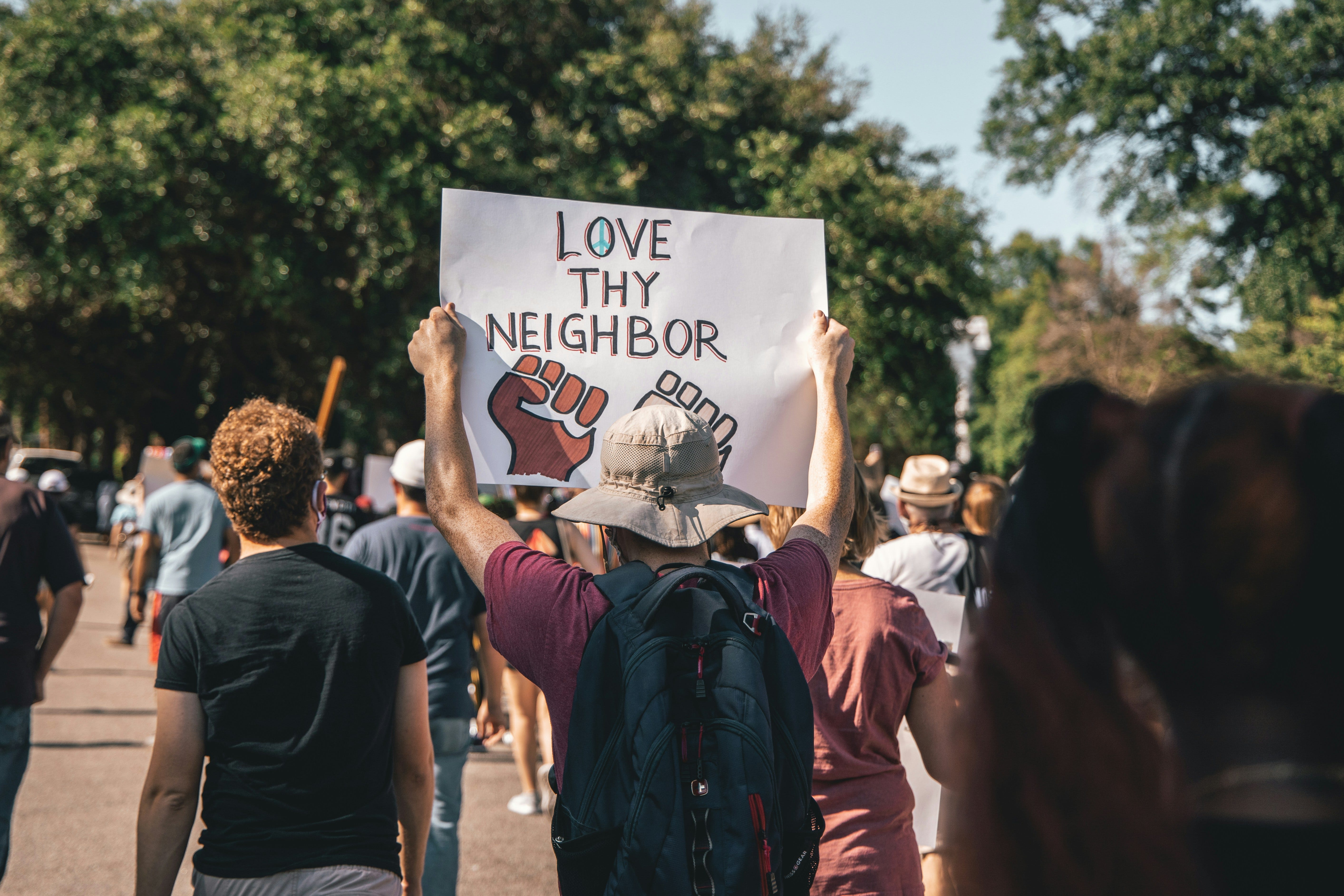
James A. Gagliano is a serious man who has spent decades confronting serious threats. His recent column arguing that anti-ICE protests resemble an insurgency reflects a perspective shaped by long service in the FBI and time spent confronting organized violence abroad. That experience deserves respect.
It also deserves fair scrutiny.
Mr. Gagliano and I share many core values. Violence against law enforcement is unacceptable. When someone is accused of obstructing moral and lawful government action, the public is entitled to due process. Political disagreement does not excuse physical interference. And rhetoric that inflames already tense situations can have tragic consequences.
Where we part ways is on the central claim: that today’s anti-ICE protest activity should be understood through the lens of insurgency.
Words matter. Especially in a country governed by laws, not metaphors.
Organization is not insurgency. Coordination is not criminal by default. Americans organize constantly, around churches, unions, charities, disaster response, journalism, and yes, protest. Law enforcement itself relies on dispatchers, rapid alerts, and secure communications to do its work safely. These tools are not suspicious in themselves; they are features of modern civic life.
An insurgency is something else entirely. It involves armed violence, territorial control, and an explicit aim to overthrow or replace moral lawful authority. Americans do not need imagination to know what that looks like. We saw it clearly on January 6, when a mob attacked police officers, breached a government building, and sought to halt the constitutional transfer of power. That was an insurrection. It was violent, unmistakable, and rightly prosecuted.
Minneapolis is not Kabul. Protesters filming federal agents are not enemy combatants. Conflating the two does not sharpen our understanding. It dulls it.
I say this as someone who has spent years researching and observing malign influence campaigns, both foreign and domestic. These efforts rarely succeed by persuading people of a coherent ideology. Their aim is simpler and more corrosive: to deepen division, heighten mistrust, and turn neighbors into enemies. They thrive when every disagreement is treated as existential conflict and institutions are cast as immune from accountability to the people they are meant to serve.
That is why rhetoric matters for public safety, especially officer safety.
When protests are described as “insurgencies,” the implied response is escalation. Escalation raises tension. Tension increases the risk of miscalculation. Miscalculation puts people at risk, including the very officers we want to keep safe. That is unacceptable.
There is also an uncomfortable historical reality worth acknowledging. Governments, including ones self-identifying as democratic, have a long record of over-policing vocal demonstrators and agents of change, sometimes criminally and sometimes with tragic results. This is not uniquely American. In the United Kingdom, reporting last year documented undercover officers who infiltrated protest movements for years under false identities, deceiving members of the public into intimate relationships while concealing their true roles, sometimes fathering children in the process. Episodes like these do not indict policing as a profession, but they do illustrate what happens when dissent is treated primarily as a threat rather than a civic signal.
My understanding is most law enforcement officers want clear rules, clear missions, and safe resolutions. Precision in language helps provide that clarity. Overheated analogies do not.
Mr. Gagliano is right to note that encrypted messaging, aliases, and decentralized organizing exist within today’s protest movements. He is wrong to suggest that these features are inherently nefarious. Nearly all iPhone messages are encrypted by default. Banks, hospitals, credit bureaus, and government agencies suffer major data breaches with regularity. In an era like this, taking privacy seriously is not suspicious—it is prudent. Journalists use encryption to protect sources. Lawyers use it to protect clients. Survivors of domestic violence use it to protect their lives. Treating privacy as a red flag does not enhance security; it chills lawful speech and pushes civic activity further from public view.
The same is true of federalism. Cities and states are not insurgent because they decline to assist federal enforcement. Courts have upheld that distinction repeatedly. Non-cooperation is not obstruction. Disagreement between levels of government is not rebellion. Calling it such puts local officials, and local officers, in an unnecessary and dangerous bind.
Where there is clear, individualized evidence of unlawful obstruction or violence—evidence that would withstand public scrutiny and persuade a fair-minded jury—due process should follow, carefully and without undue haste. Where that standard is not met, restraint is not weakness but respect for the rule of law. The law loses its moral authority when it assigns collective guilt or treats civic dissent itself as a crime.
The United States is a loud country by design. Protest is not a flaw in the system; it is a feature of it. The challenge is not to suppress that noise, but to manage it within constitutional bounds, calmly, precisely, and without importing the language of war into our streets.
Mr. Gagliano’s experience gives him a valuable perspective. But it does not override facts or realities. Democracies remain strong not by seeing insurgents everywhere, but by reserving that label for when it is unmistakably earned and applying where appropriate.
When everything becomes an insurgency, nothing is—and everyone is less safe.
These are not concepts that require doctorates, credentials, or decades of experience with law enforcement. These are concepts any reasonable American could understand, even a random sampling of twelve.
Great job breaking it down…thanks
Lucid and well-argued. Thank you.